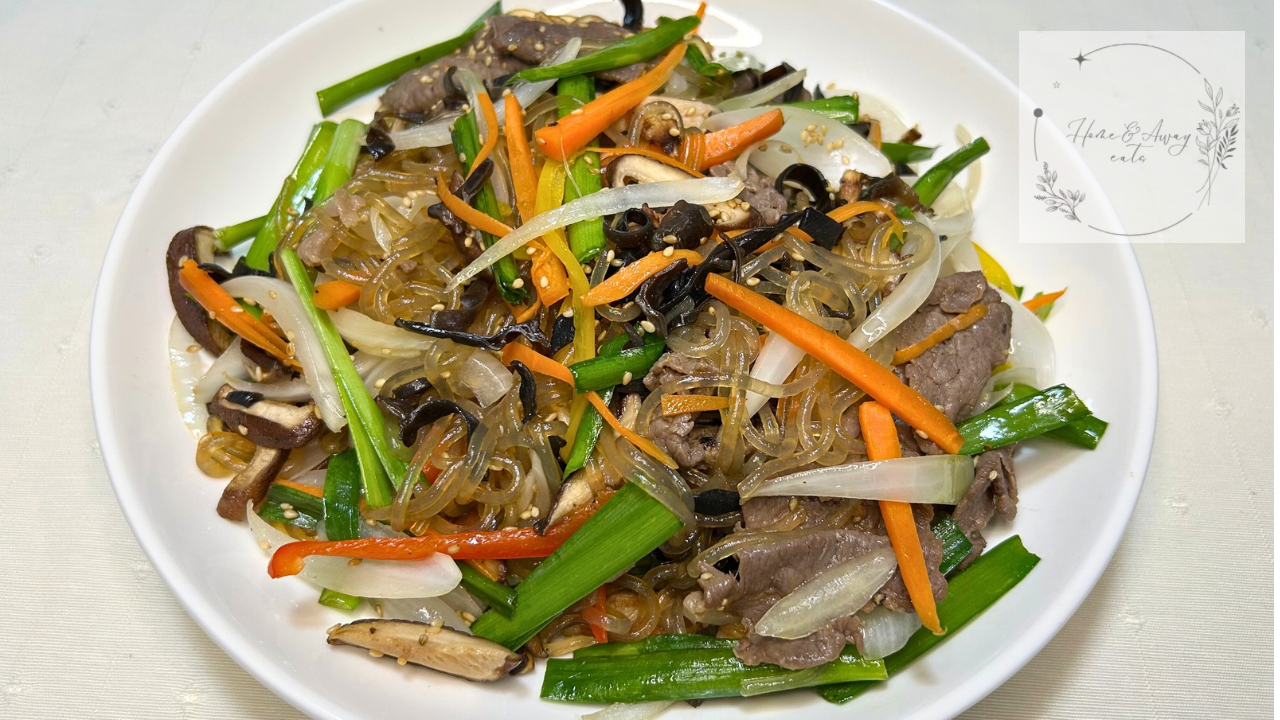
Authentic Japchae Recipe (Korean Glass Noodles) — Colorful, Chewy, and Perfect for Sharing
Introduction
Japchae is one of Korea’s most beloved celebration dishes, known for its beautiful presentation and balance of flavors. Originating in the 17th century, this noodle dish was once served to royalty and has since become a staple in Korean homes and festive tables.
In this post, you’ll learn the traditional method for making Japchae: from the proper way to season Korean glass noodles (dangmyeon) to the importance of sautéing each vegetable separately. This recipe comes from a Korean friend, Jiyoung, whose version is so delicious, her husband falls in love with her all over again each time she makes it.
Whether you’re craving something familiar with a twist or learning how to layer textures like chewy, soft, and crisp—all in one bite—this recipe is for you.
Ingredients
Korean Glass Noodles (Dangmyeon)
• 100g Korean sweet potato noodles (Buy here)
• 1½ tbsp soy sauce
• ½ tbsp sesame oil
• ½ tbsp sugar
Beef (Traditional Option)
• 100g thinly sliced beef or beef scraps
Marinade (Yangnyeom)
• 1 tbsp soy sauce
• 1 tsp grated garlic
• 1 tsp sesame oil
• 1 tsp sugar
• A pinch of black pepper
Vegetables (Sauté separately)
• 100g onion, thinly sliced
• 30g garlic chives (nira), 4–5cm pieces
• 20g carrot, julienned
• 2 shiitake mushrooms, sliced
• ¼ red or yellow bell pepper, thinly sliced
• 5g dried wood ear mushrooms, rehydrated and shredded
Other
• Cooking oil as needed
• Salt and pepper to taste
• White sesame seeds for garnish
Instructions
Step 1: Boil and season the noodles
1. Boil noodles in plenty of water for 8–10 minutes.
2. Rinse under cold water and drain thoroughly.
3. Toss with soy sauce, sesame oil, and sugar.
Step 2: Marinate and cook the beef
1. Rub beef with marinade ingredients until well coated.
2. Sauté over medium heat in a lightly oiled pan until cooked through. Set aside.
Step 3: Sauté vegetables separately
1. Sauté onion with salt and pepper until soft.
2. Repeat with carrot, then with shiitake, wood ear, and bell pepper.
3. Quickly stir-fry garlic chives last (just a few seconds).
Step 4: Combine and finish
1. In a large bowl or pan, combine noodles, beef, and vegetables.
2. Toss gently. Add more soy sauce or sesame oil if needed.
3. Sprinkle with white sesame seeds and serve.
Tips
• Pre-seasoning noodles early locks in flavor.
• Cooking vegetables separately enhances color and texture.
• Toss instead of stir-frying at the end to keep the dish glossy and elegant.
• Best enjoyed warm or at room temperature.
Watch the Full Recipe on YouTube!
📺 For a step-by-step tutorial, check out my YouTube video:
Let me know if you tried this recipe in the comments!
And don’t forget to like, subscribe, and share.
Discover more from Home&Away Eats
Subscribe to get the latest posts sent to your email.